CYMATIC
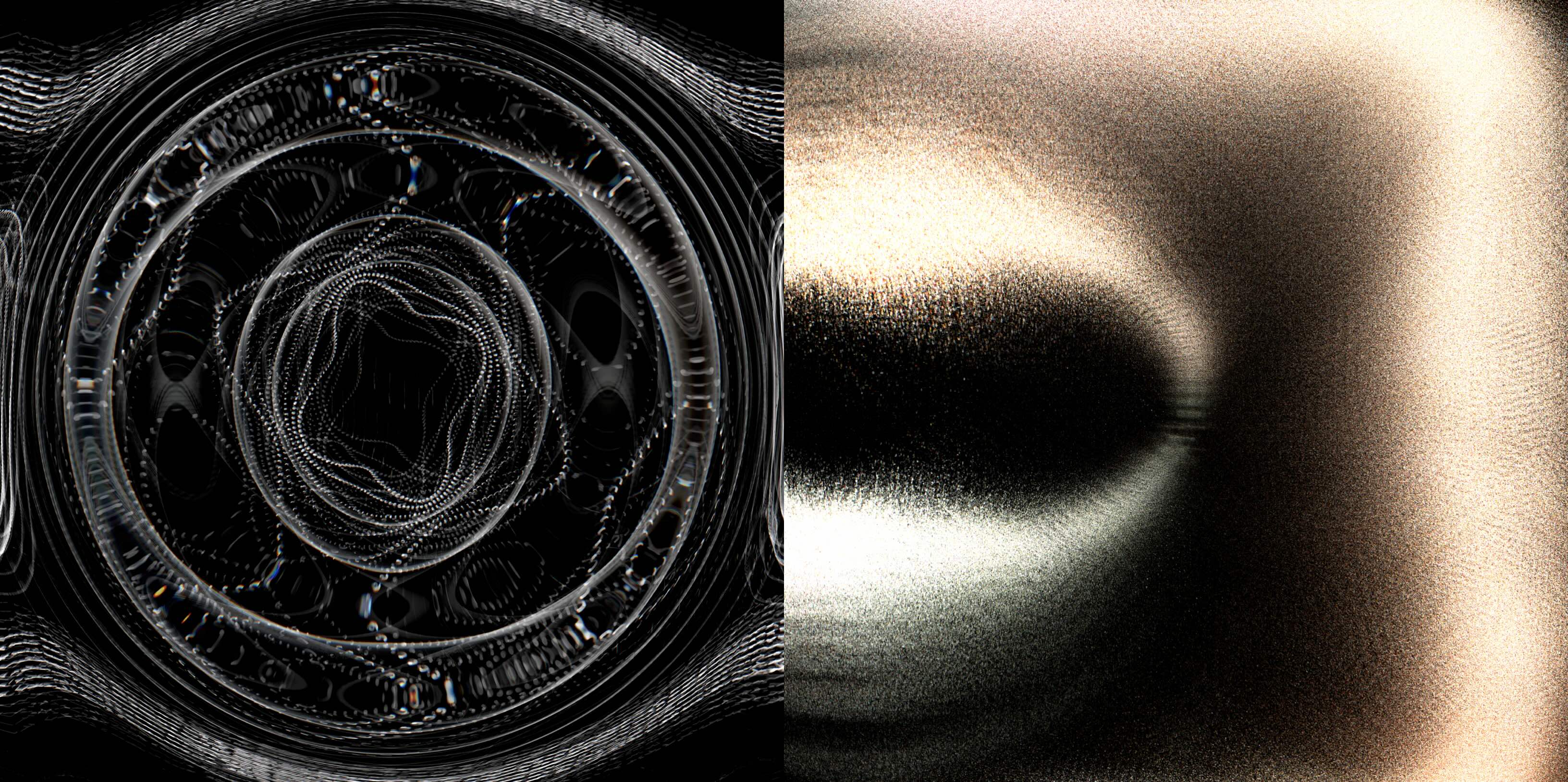
CYMATIC is a collaboration with photographer Erika Weitz that translates acoustic phenomena into dual form — once in code, once in chemistry. A custom generative algorithm simulates the Chladni resonance patterns produced by five notes of the C major pentatonic scale (C, D, E, G, A), casting those patterns as light projections onto a wet collodion plate, where Weitz captures them through one of the oldest photographic processes in existence. Each of the five resulting works is a unique physical object — a moment in which transient vibration takes tangible, permanent form on metal.
The project follows in the footsteps of early light abstraction: Ben Laposky's oscillons of the 1950s, Berenice Abbott's interference patterns at MIT — work that demonstrated photography could simultaneously serve scientific inquiry and abstract artistic expression. CYMATIC inhabits the same territory: the Chladni patterns it renders are not invented but revealed, already latent in the physics of the pentatonic scale, one of music's most ancient and universal structures. That the same underlying harmonic relationships surface across cultures and centuries — and now across code and collodion — is part of what the work is examining.
The collaboration required both artists to learn to think through the other's medium. What resolved cleanly in the algorithm didn't always survive the wet plate; the chemistry demanded its own negotiation. The project frames this friction as generative rather than incidental — each medium offering a different resolution of the same phenomenon, neither complete on its own. Science has always operated this way: building models that abstract complex realities into forms our senses can hold. CYMATIC is another such translation, one that leaves both source and copy visible.
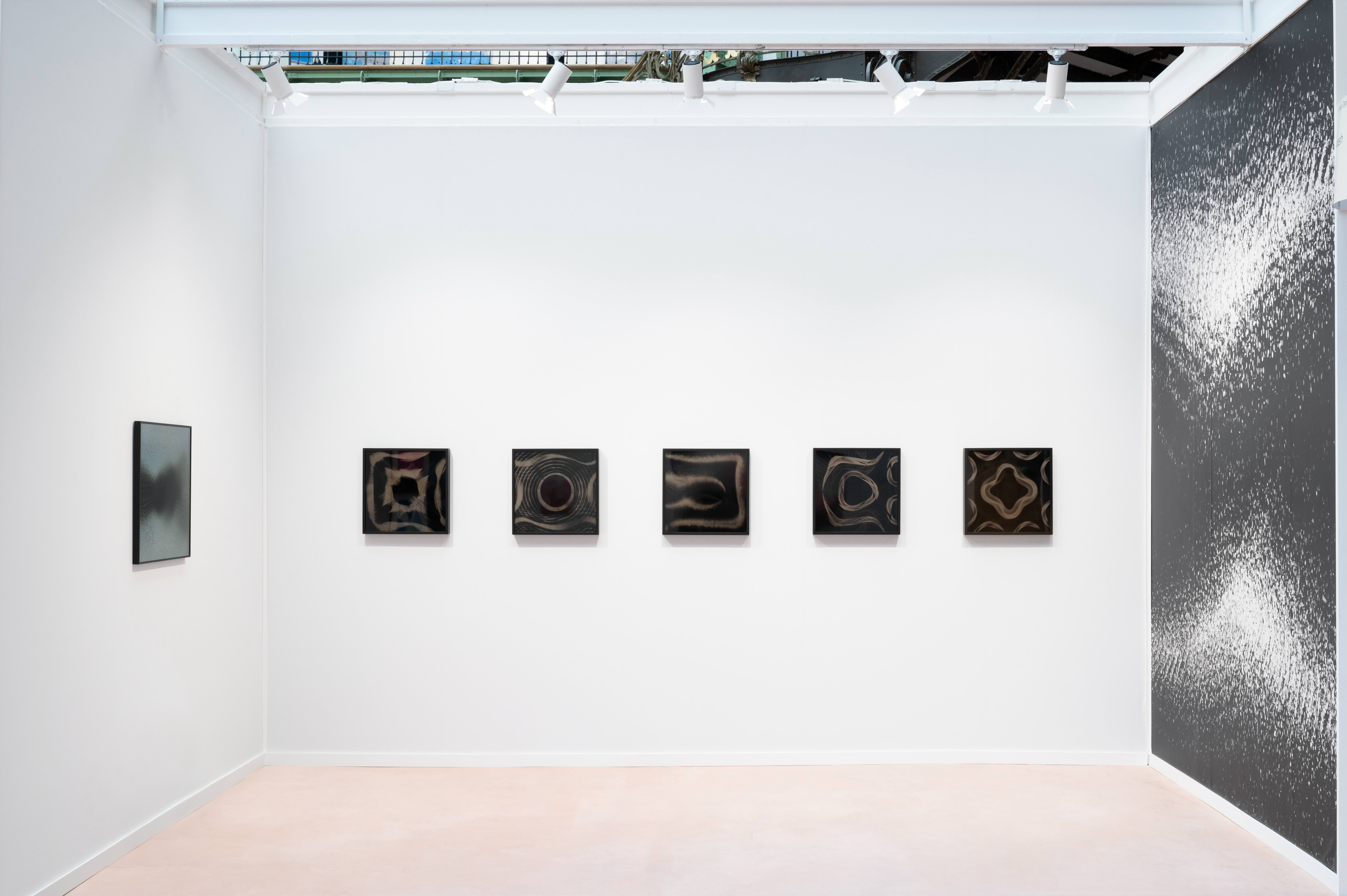
Installation view, Paris Photo Fair 2024.
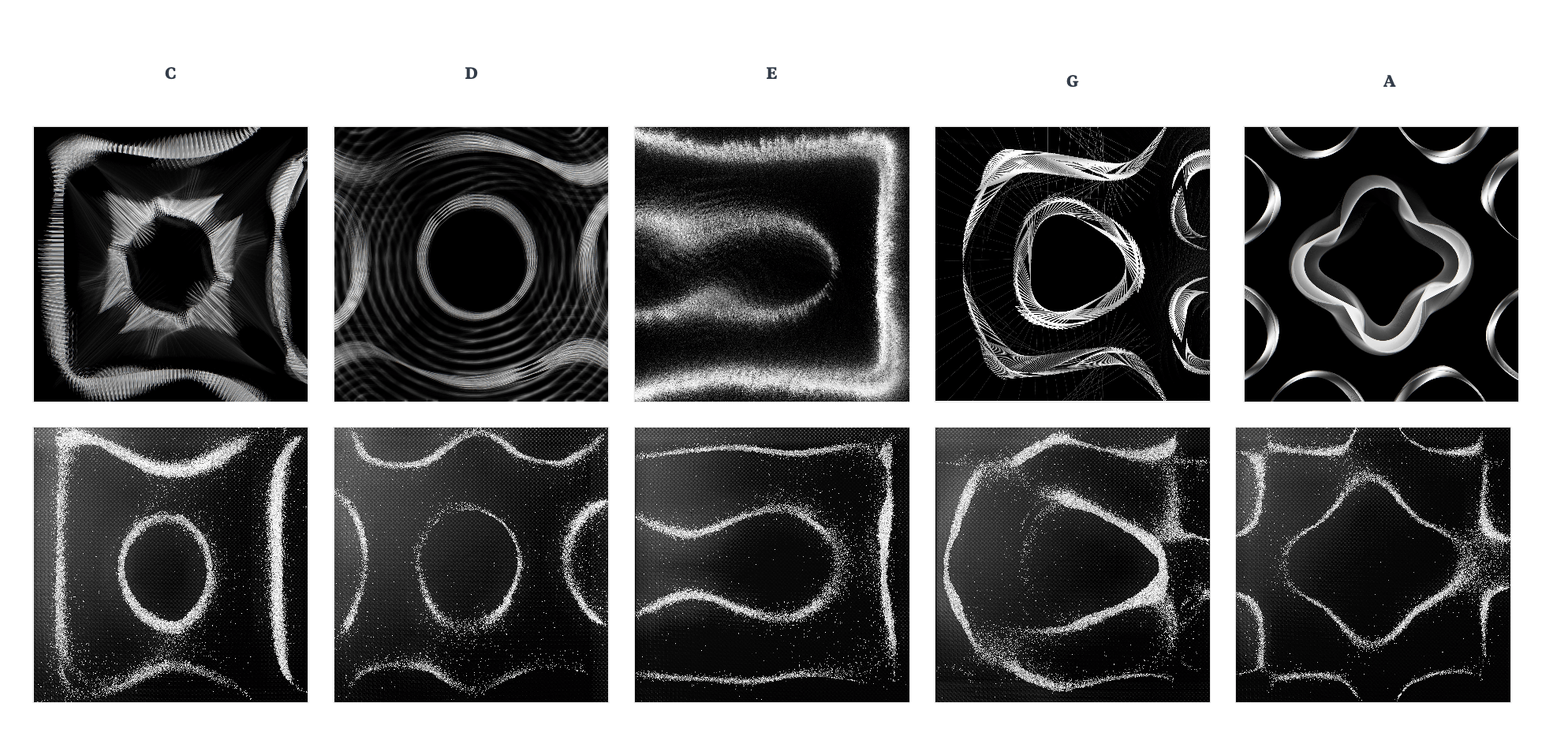
Top row: generative renders for notes C, D, E, G, A. Bottom row: corresponding analog photographic prints.
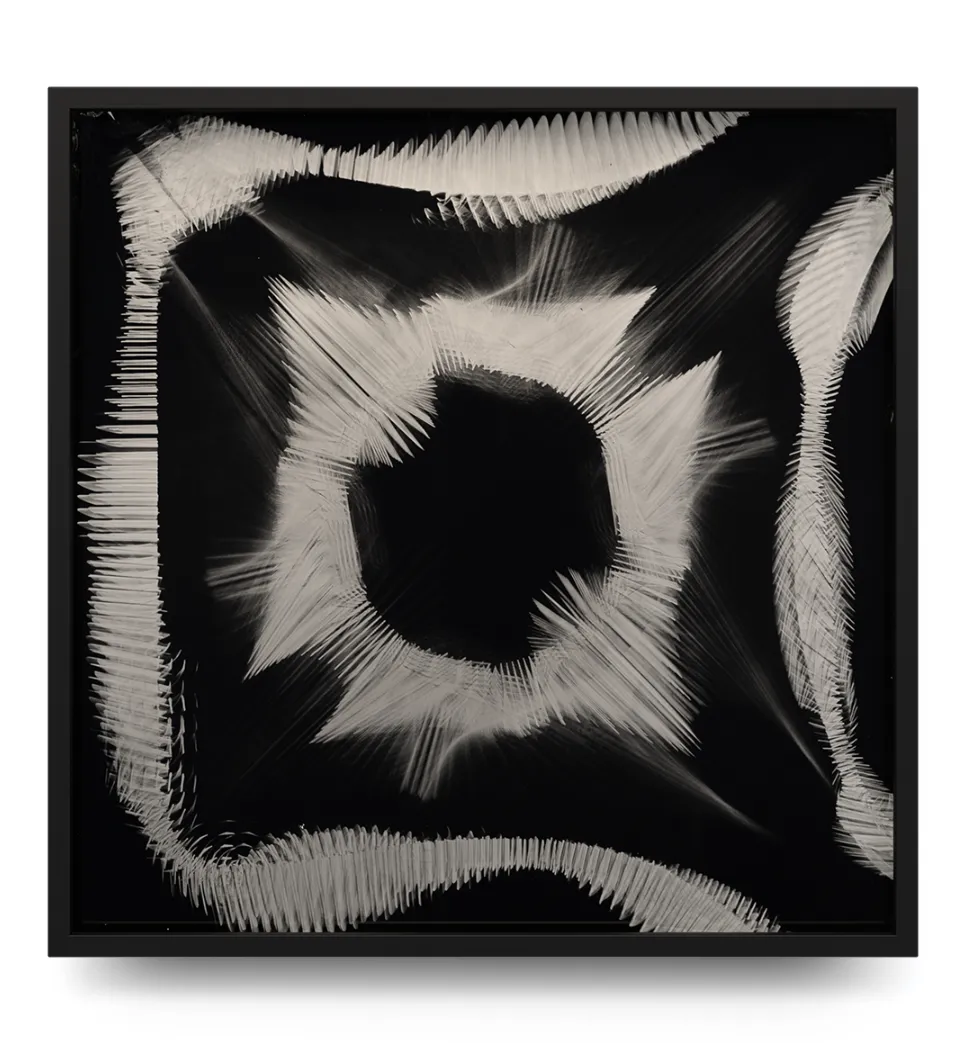
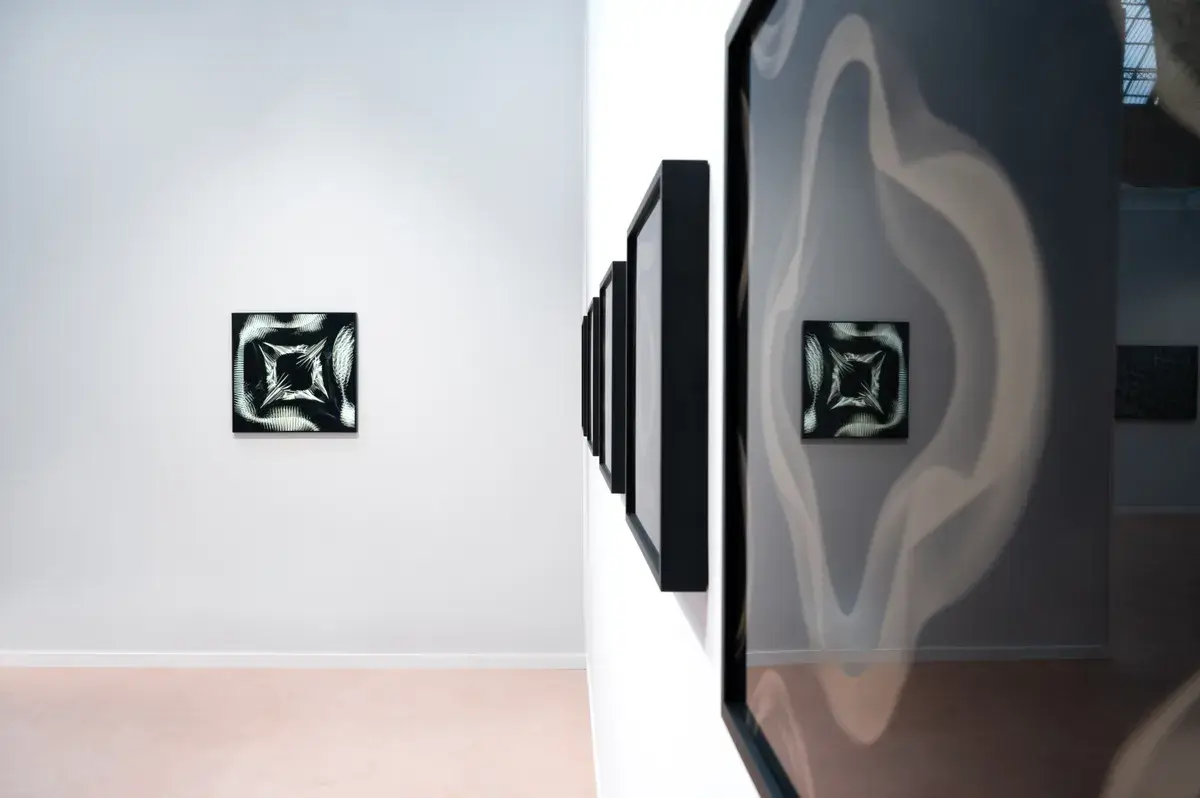
Left: note C. Right: installation detail, Paris Photo Fair 2024.
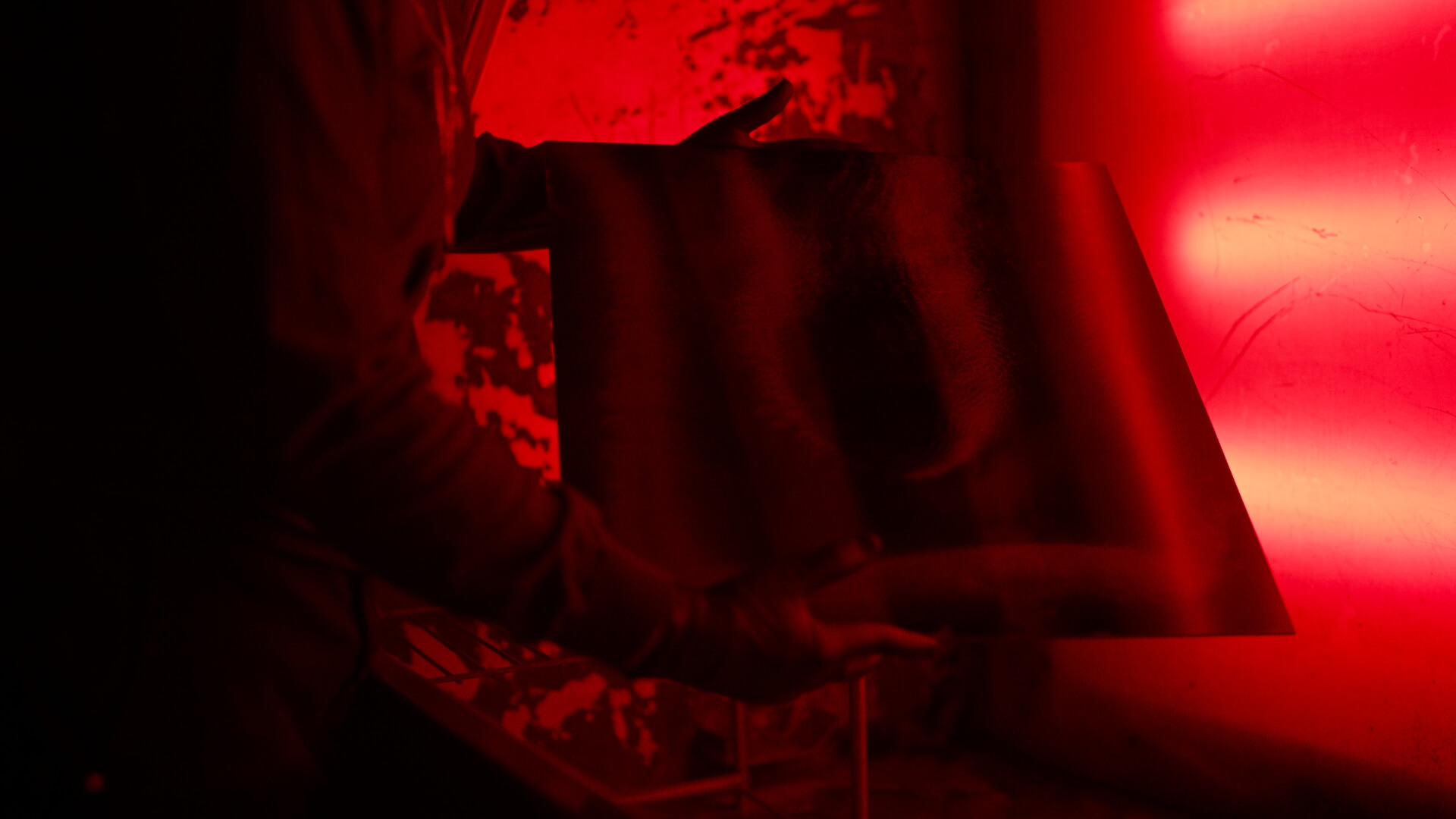
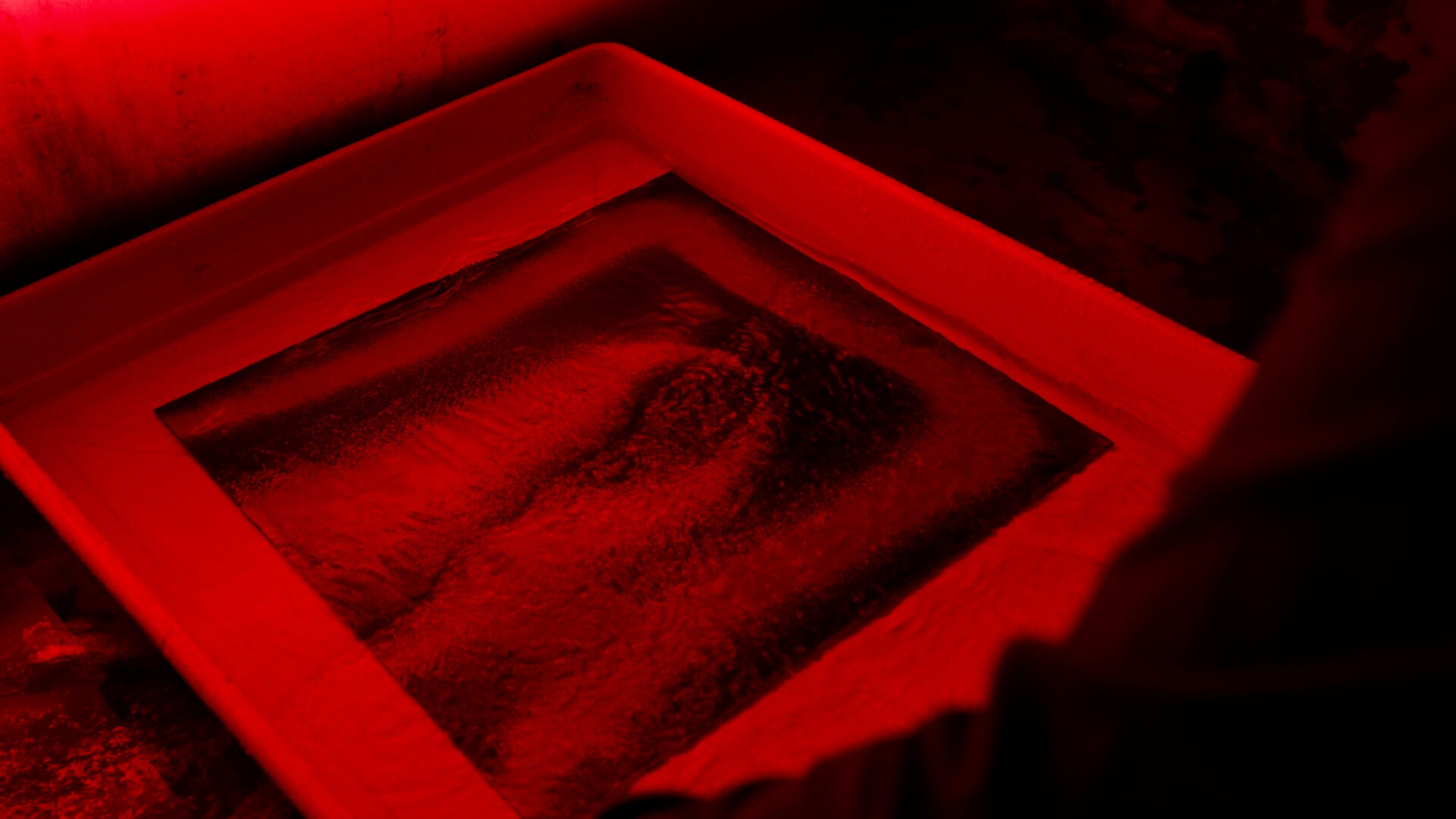
Darkroom process. Wet plates developed by Erika Weitz.
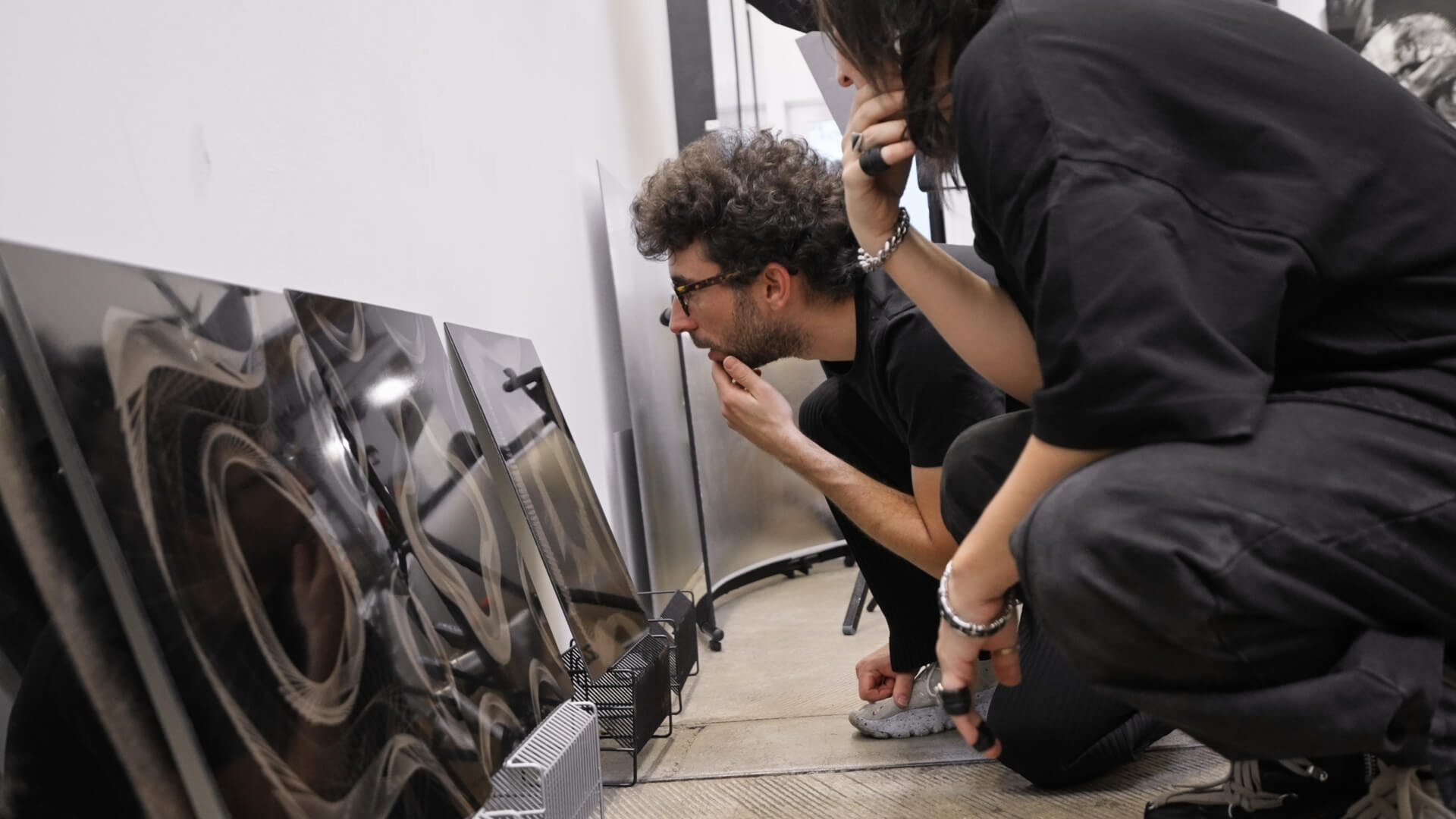
Thomas Noya and Erika Weitz reviewing prints prior to Paris Photo.
Process
The generative component is a bespoke system built in JavaScript and p5.js that simulates the Chladni resonance patterns associated with each note of the pentatonic scale. Parameters were tuned iteratively against the physical results — what resolved well on screen didn't always project cleanly onto the plate, and the algorithm was adjusted accordingly. Weitz's photographic process uses wet plate collodion, invented by Frederick Scott Archer in 1851: a glass or metal plate is coated with a collodion solution, sensitized in a silver nitrate bath, exposed while still wet, and developed immediately. The entire sequence must be completed within minutes. For CYMATIC, the exposure source is the projected generative output rather than a lens — the code becomes the light source, and the plate becomes the record.